
Introduction
One of the biggest financial challenges freelancers face is managing taxes properly. Unlike traditional employees who have taxes automatically deducted from their paychecks, freelancers are responsible for handling their own tax obligations throughout the year.
That means every client payment you receive is not fully yours to spend.
A portion of your freelance income belongs to future tax payments, including:
- Income taxes
- Self-employment taxes
- Business taxes
- Quarterly estimated taxes
- Regional or local tax obligations
Unfortunately, many freelancers make the same mistake: they wait until tax season to think about taxes.
By then, the money may already be spent.
This creates financial stress, cash shortages, debt, and sometimes tax penalties.
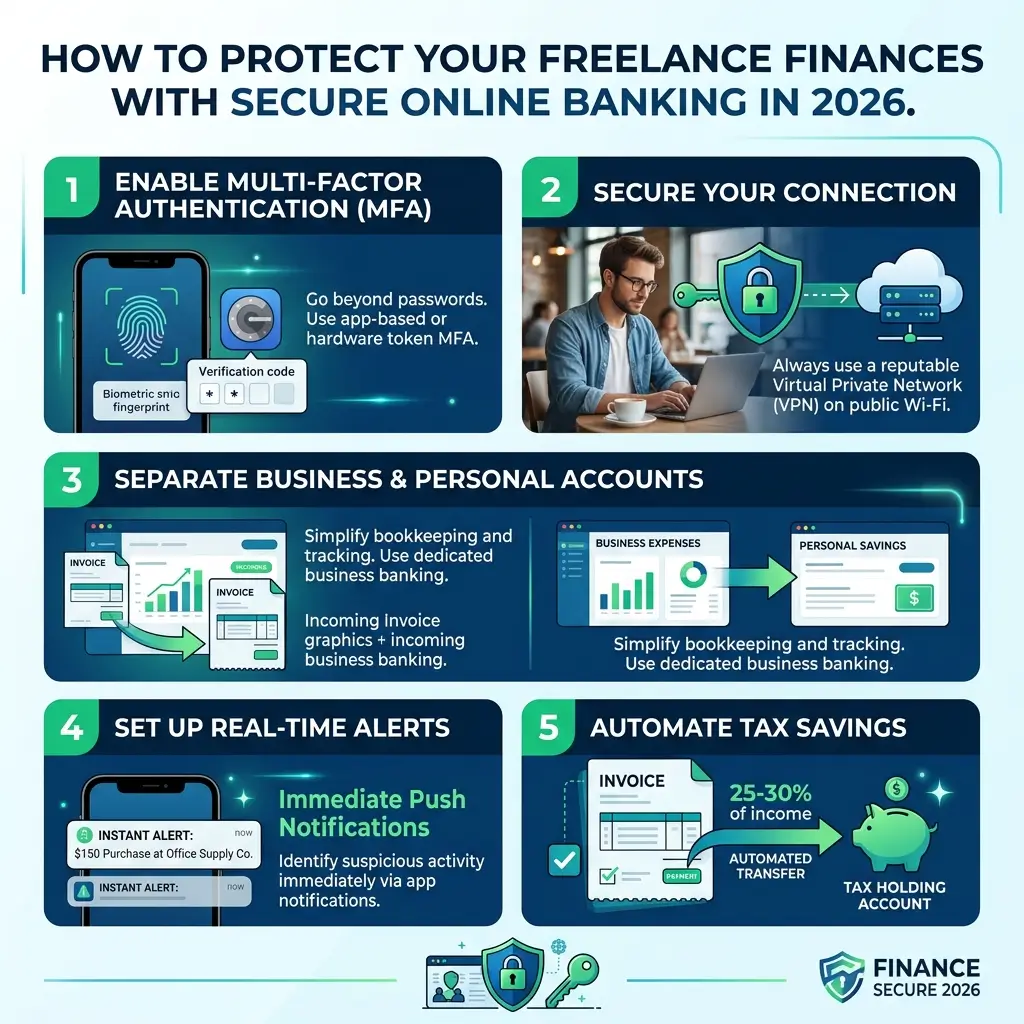
The good news is that modern online banking makes tax management much easier. With automation tools, freelancers can automatically save a percentage of every payment they receive without relying on manual discipline.
In 2026, automating tax savings is one of the smartest financial systems freelancers can build.
This guide explains how freelancers can use online banking automation to consistently save for taxes, improve cash flow management, and reduce financial anxiety year-round.
Why Tax Automation Matters for Freelancers
Freelance income is often unpredictable.
Some months may bring large client payments, while others are slower. Because of this inconsistent cash flow, freelancers frequently underestimate how much they owe in taxes.
Without a structured system, many freelancers:
- Under-save for taxes
- Accidentally spend tax money
- Miss quarterly deadlines
- Face penalties and interest
- Experience financial stress during tax season
- Struggle with budgeting
Tax automation solves these problems by turning tax savings into a consistent financial habit.
Instead of relying on memory or self-control, your banking system handles savings automatically in the background.
This creates:
- Better financial discipline
- Predictable tax preparation
- Reduced stress
- Improved business stability
- More accurate cash-flow visibility
Automation removes emotional decision-making from tax management.
The Biggest Tax Challenges Freelancers Face
Before building an automation strategy, it’s important to understand why tax management becomes difficult for freelancers.
Irregular Income
Freelancers rarely earn the same amount every month.
Income fluctuations make it harder to estimate taxes accurately.
A freelancer may earn:
- $2,000 one month
- $8,000 the next
- Then experience a slow period afterward
Without a structured savings system, high-income months often lead to overspending.
No Automatic Tax Withholding
Traditional employers automatically deduct taxes from employee paychecks.
Freelancers must handle this themselves.
That means every payment received requires financial planning and discipline.
Quarterly Tax Payments
In many countries, freelancers must make estimated tax payments throughout the year.
Missing deadlines may result in:
- Penalties
- Interest charges
- Cash-flow problems
Automated savings help ensure funds are available when payments are due.
Mixing Tax Money With Spending Money
One of the biggest freelancer mistakes is keeping all money in one account.
When taxes and spending funds are mixed together, it becomes difficult to know how much money actually belongs to the government.
This creates dangerous overspending habits.
Step 1: Estimate Your Tax Percentage
Before automating savings, freelancers need a rough estimate of how much income should be reserved for taxes.
This percentage varies depending on:
- Country
- State or province
- Income level
- Business structure
- Self-employment taxes
- Eligible deductions
Common Freelancer Tax Reserve Ranges
Many freelancers reserve between:
- 20%
- 25%
- 30%
- 35%
Higher-income freelancers may need larger reserve percentages.
It’s generally safer to slightly over-save than under-save.
Factors That Affect Tax Obligations
Tax liability depends on multiple variables, including:
- Total annual income
- Business expenses
- Home office deductions
- Retirement contributions
- Health insurance deductions
- Tax credits
- Local tax regulations
Freelancers with growing income should review tax estimates regularly.
Use Conservative Estimates
Many experienced freelancers intentionally reserve slightly more than necessary.
For example:
If estimated taxes are 23%, they may automate 25–30% savings for safety.
Extra savings can later become:
- Emergency funds
- Investments
- Business reserves
Under-saving creates far more financial problems than over-saving.
Step 2: Open a Separate Tax Savings Account
One of the most effective freelance financial habits is separating tax money completely from everyday spending.
Why Separate Accounts Matter
When tax money stays inside your main checking account, it becomes psychologically easy to spend.
A dedicated tax savings account creates:
- Clear financial separation
- Better visibility
- Reduced spending temptation
- Cleaner bookkeeping
- Easier tax preparation
This simple system dramatically improves financial organization.
What Type of Account Should Freelancers Use?
Most freelancers use:
- High-yield savings accounts
- Business savings accounts
- Separate tax reserve accounts
Ideally, the account should:
- Be easy to access when taxes are due
- Remain separate from daily spending
- Offer online automation features
Some freelancers even nickname the account “Tax Savings” to reinforce its purpose.
Avoid Mixing Emergency Funds and Tax Savings
Tax reserves are not emergency savings.
Keep separate accounts for:
- Taxes
- Emergency reserves
- Operating expenses
- Personal spending
This creates much stronger financial clarity.
Step 3: Automate Transfers After Every Payment
Automation is where the system becomes powerful.
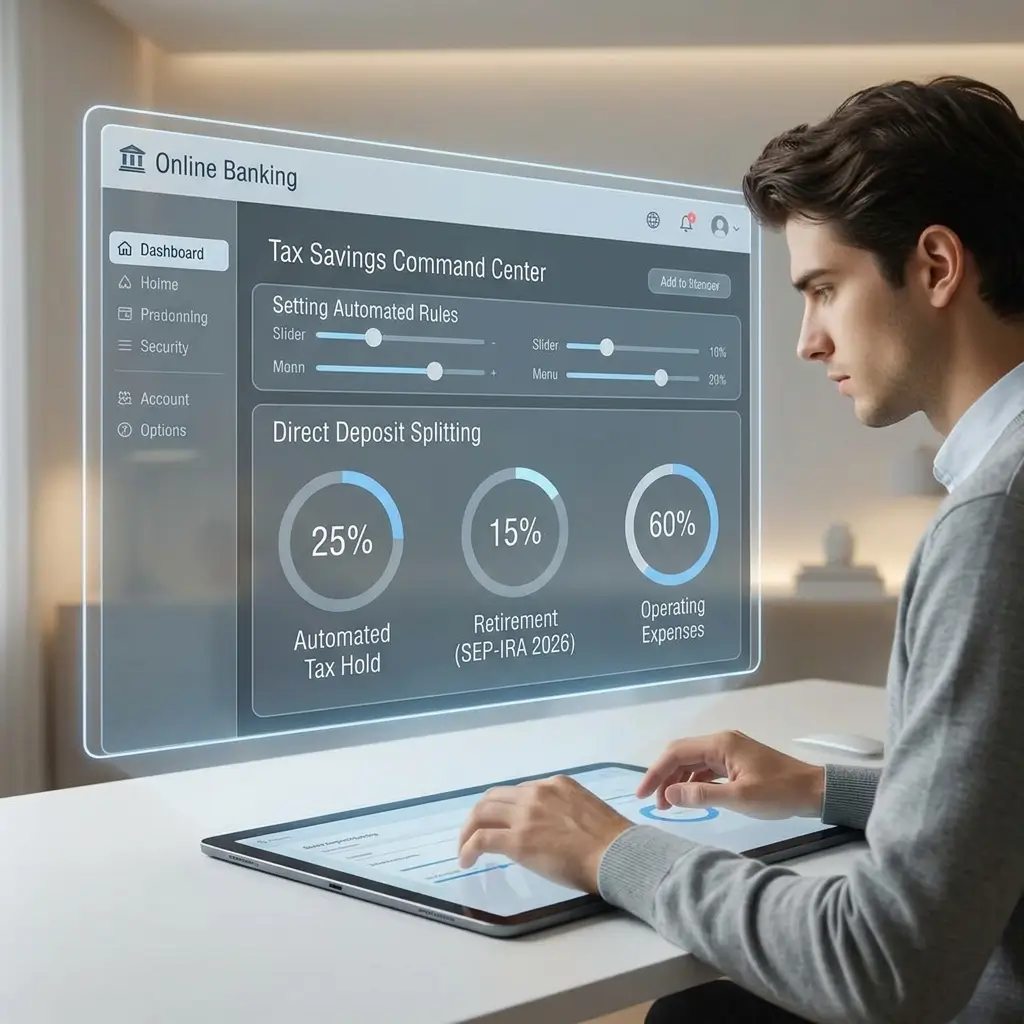
Instead of manually transferring money each time you get paid, online banking can move tax funds automatically.
How Automatic Tax Transfers Work
Example:
- Client payment received: $1,000
- Automated transfer rule: 25%
- Amount moved to tax savings: $250
This happens immediately or on a scheduled basis without requiring manual action.
Why Automation Is So Effective
Automation removes:
- Forgetfulness
- Emotional spending
- Financial procrastination
- Inconsistent saving habits
Once the system is active, tax savings happen consistently in the background.
Ways to Automate Tax Savings
Freelancers commonly automate using:
- Bank transfer rules
- Scheduled recurring transfers
- Percentage-based savings tools
- Banking automation apps
- Payment processor integrations
Many modern online banks allow customizable automation directly inside mobile apps.
Automate Immediately After Income Arrives
The best time to move tax money is immediately after payment hits your account.
Why?
Because money sitting in your spending account feels psychologically available.
Instant separation reduces the temptation to overspend.
Step 4: Track Tax Savings Progress Monthly
Automation works best when combined with regular financial reviews.
Freelancers should monitor tax savings consistently throughout the year.
What to Review Monthly
Track:
- Total tax savings balance
- Monthly income
- Estimated tax liability
- Income growth trends
- Expense changes
- Savings percentage accuracy
This helps ensure your automation system remains realistic and effective.
Adjust Savings Rates When Income Changes
Freelance income may grow significantly over time.
A savings percentage that worked last year may no longer be enough.
For example:
- Higher income may trigger higher tax brackets
- Business expansion may change deductions
- New regulations may increase obligations
Quarterly reviews help maintain accuracy.
Use Bookkeeping Software for Better Estimates
Accounting tools help freelancers estimate taxes more accurately.
Popular platforms include:
These tools can:
- Track income
- Categorize expenses
- Estimate taxes
- Generate reports
- Improve financial forecasting
Automation becomes much more effective with accurate bookkeeping data.
Step 5: Prepare for Quarterly Tax Payments
In many countries, freelancers must make estimated quarterly tax payments rather than paying once per year.
This surprises many new freelancers.
Why Quarterly Payments Matter
Governments often require freelancers to pay taxes gradually throughout the year.
Missing deadlines may lead to:
- Penalties
- Interest charges
- Compliance issues
Automated savings ensure money is already available when payment dates arrive.
Use Reserved Funds Only for Taxes
Your tax savings account should exist for one purpose only:
Paying taxes.
Avoid treating these funds as:
- Emergency cash
- Investment money
- Business operating capital
- Personal spending funds
Maintaining discipline protects long-term financial stability.
Create Tax Payment Reminders
Even with automated savings, freelancers should still track payment deadlines carefully.
Use:
- Calendar reminders
- Banking alerts
- Accounting software notifications
Automation works best alongside organized financial planning.
Best Practices for Automating Freelance Tax Savings
Successful freelancers usually follow a few key principles consistently.
Round Up Your Savings Percentage
If you estimate 22% taxes, consider saving 25%.
Small overestimations create financial breathing room.
Underestimating taxes creates stress and risk.
Recalculate Quarterly
Freelance businesses evolve constantly.
Review tax estimates every few months, especially after:
- Large income increases
- New clients
- Business expansion
- Major expense changes
Dynamic adjustments improve accuracy.
Keep Operating Cash Separate
Your business operating account should remain distinct from tax savings.
This improves:
- Budget clarity
- Cash-flow management
- Financial discipline
Separate systems create stronger control.
Use Banking Automation Tools
Modern online banking platforms often support:
- Smart transfer rules
- Percentage-based automation
- Scheduled savings systems
- Goal tracking
These features simplify tax management dramatically.
Common Tax Saving Mistakes Freelancers Should Avoid
Many freelancers struggle financially because of avoidable habits.
Keeping Tax Money in Main Checking Accounts
This is one of the biggest freelancer financial mistakes.
If tax money stays visible in daily spending accounts, it becomes psychologically easier to use.
Separate accounts reduce temptation.
Forgetting to Increase Savings After Income Growth
As freelance income grows, tax obligations usually increase too.
Failing to adjust savings percentages may create large future tax shortages.
Treating Tax Savings as Spendable Cash
Tax money is not discretionary income.
Using reserved funds for lifestyle spending often creates financial emergencies later.
Ignoring Quarterly Deadlines
Even if taxes are fully saved, missing payment deadlines can still trigger penalties.
Freelancers must remain organized year-round.
Advanced Tax Automation Strategies for Freelancers
Experienced freelancers often build more sophisticated financial systems.
Create Multiple Savings Buckets
Some freelancers separate income into multiple automated categories:
- Taxes
- Emergency savings
- Retirement
- Business investments
- Personal income
This creates highly organized financial management.
Automate Retirement Contributions
Some online banking systems allow automatic retirement transfers alongside tax savings.
This helps freelancers build long-term financial security consistently.
Use Percentage-Based Budgeting Systems
A percentage-based system may allocate income like:
- 30% taxes
- 20% savings
- 50% operating/personal spending
This creates predictable financial control even with fluctuating income.
The Long-Term Benefits of Tax Automation
Automating taxes does more than reduce stress.
It creates:
- Better financial discipline
- Improved cash-flow stability
- Reduced tax anxiety
- Stronger business organization
- More predictable finances
- Better long-term planning
Freelancers who automate financial systems early often manage business growth more successfully later.
Final Thoughts
Managing taxes as a freelancer can feel overwhelming, especially with irregular income and self-managed financial responsibilities. But modern online banking tools make the process much easier.
By automating tax savings, freelancers can consistently set aside money throughout the year without relying on memory or willpower.
A strong tax automation system includes:
- Estimating taxes accurately
- Opening dedicated savings accounts
- Automating transfers
- Reviewing savings regularly
- Preparing for quarterly payments
These habits improve financial stability and reduce unnecessary stress during tax season.
In 2026, successful freelancers are not just creative professionals or skilled service providers.
They are disciplined financial operators who build systems that protect their business long-term.