

Introduction
Freelancing gives you flexibility, independence, and control over your income. But as your freelance business grows, managing money through a personal bank account can quickly become messy and unprofessional.
One of the smartest financial decisions a freelancer can make is opening a dedicated business bank account.
A business bank account helps freelancers:
- Separate personal and business finances
- Simplify bookkeeping
- Prepare for taxes more efficiently
- Improve financial organization
- Build credibility with clients
- Manage cash flow more professionally
Many freelancers delay opening a business account because they assume it is only necessary for large companies or registered corporations. In reality, even solo freelancers and independent contractors can benefit significantly from having a separate business banking setup.
In 2026, modern banks and fintech platforms make it easier than ever for freelancers to open business accounts online with minimal paperwork.
This guide explains everything freelancers need to know about opening a business bank account, including required documents, account types, how to choose the right bank, and common mistakes to avoid.
Why Freelancers Need a Business Bank Account
Many freelancers start by accepting payments into their personal bank account.
While this may seem convenient initially, it often creates long-term financial complications.
A dedicated business account creates structure and professionalism from the beginning.
Separate Personal and Business Expenses
One of the biggest benefits of a business bank account is financial separation.
When personal and business transactions mix together, it becomes difficult to:
- Track expenses
- Calculate profits
- Prepare taxes
- Monitor business performance
A dedicated account creates much cleaner financial records.
Simplify Bookkeeping and Tax Filing
Freelancers are responsible for managing their own taxes and financial reporting.
A business account helps organize:
- Client payments
- Business expenses
- Tax deductions
- Software subscriptions
- Contractor payments
This reduces accounting confusion significantly.
Build Financial Credibility With Clients
Clients often view freelancers more professionally when payments are sent to a business account rather than a personal account.
A business banking setup signals:
- Professionalism
- Stability
- Business legitimacy
- Financial organization
This can improve client trust.
Track Profit and Cash Flow More Accurately
Freelancers need visibility into:
- Revenue
- Expenses
- Savings
- Taxes
- Profit margins
Business accounts make financial reporting far easier.
Prepare for Future Business Growth
Even solo freelancers may eventually need:
- Business credit
- Financing
- Loans
- Team payroll
- Agency operations
Establishing business banking early creates a stronger long-term financial foundation.
Step 1: Decide Whether You Need a Formal Business Entity
Before opening a business bank account, freelancers should understand how their business structure affects banking requirements.
The rules vary depending on:
- Country
- Bank
- Business type
- Tax regulations
Can Freelancers Open Business Accounts Without an LLC?
In many countries, yes.
Some banks allow freelancers and sole proprietors to open business accounts without formally registering a company.
Others may require legal business registration first.
Always review local banking requirements carefully.
Common Freelance Business Structures
Freelancers usually operate under one of the following setups.
Sole Proprietorship
This is the simplest freelance structure.
In many countries, freelancers automatically operate as sole proprietors unless they register another entity.
Benefits include:
- Simple setup
- Low administrative burden
- Easier tax filing
Many freelancers begin this way.
Single-Member LLC or Private Limited Company
Some freelancers eventually form legal business entities for:
- Liability protection
- Tax planning
- Professional credibility
Banks may require formal registration documents for these structures.
Partnership or Agency Structure
Freelancers operating with partners or teams may need:
- Partnership agreements
- Business registration certificates
- Multi-user banking access
Larger operations usually require more documentation.
Step 2: Gather Required Documents
Banks and fintech platforms require identity and business verification before opening accounts.
The exact requirements vary, but freelancers should prepare documentation in advance.
Common Documents Freelancers Need
Most business bank account applications require some combination of the following.
Government-Issued Identification
Banks usually require:
- Passport
- National ID card
- Driver’s license
This confirms your identity.
Proof of Address
Common proof-of-address documents include:
- Utility bills
- Bank statements
- Rental agreements
- Government correspondence
The document usually must be recent.
Tax Identification Number
Depending on your country, banks may request:
- EIN
- NTN
- Tax ID
- VAT number
Tax compliance rules vary internationally.
Business Registration Documents
If you operate as a registered company, banks may require:
- Business registration certificates
- Articles of incorporation
- Operating agreements
- Partnership documents
Freelancers operating as sole proprietors may not always need these.
Freelance Contracts or Invoices
Some online banks ask freelancers to demonstrate active business activity.
You may need to provide:
- Client invoices
- Freelance contracts
- Payment records
- Proof of services
This helps confirm legitimate business operations.
Website or Portfolio Proof
Some fintech platforms review:
- Professional websites
- Portfolios
- LinkedIn profiles
- Freelance platform accounts
This is especially common with online-only financial providers.
Step 3: Compare Business Bank Accounts Carefully
Not all business accounts are designed for freelancers.
Choosing the wrong bank can create unnecessary costs and workflow problems later.
Key Features Freelancers Should Compare
Evaluate business accounts based on practical daily usage.
Monthly Account Fees
Some banks charge:
- Monthly maintenance fees
- Platform subscription costs
- Minimum balance penalties
Low fees matter, but functionality matters too.
Minimum Balance Requirements
Certain banks require freelancers to maintain minimum balances to avoid penalties.
Review these requirements carefully before opening an account.
International Transfer Fees
Freelancers working globally should pay close attention to:
- Incoming wire fees
- SWIFT costs
- Currency conversion fees
- Outgoing transfer charges
International banking costs can become significant over time.
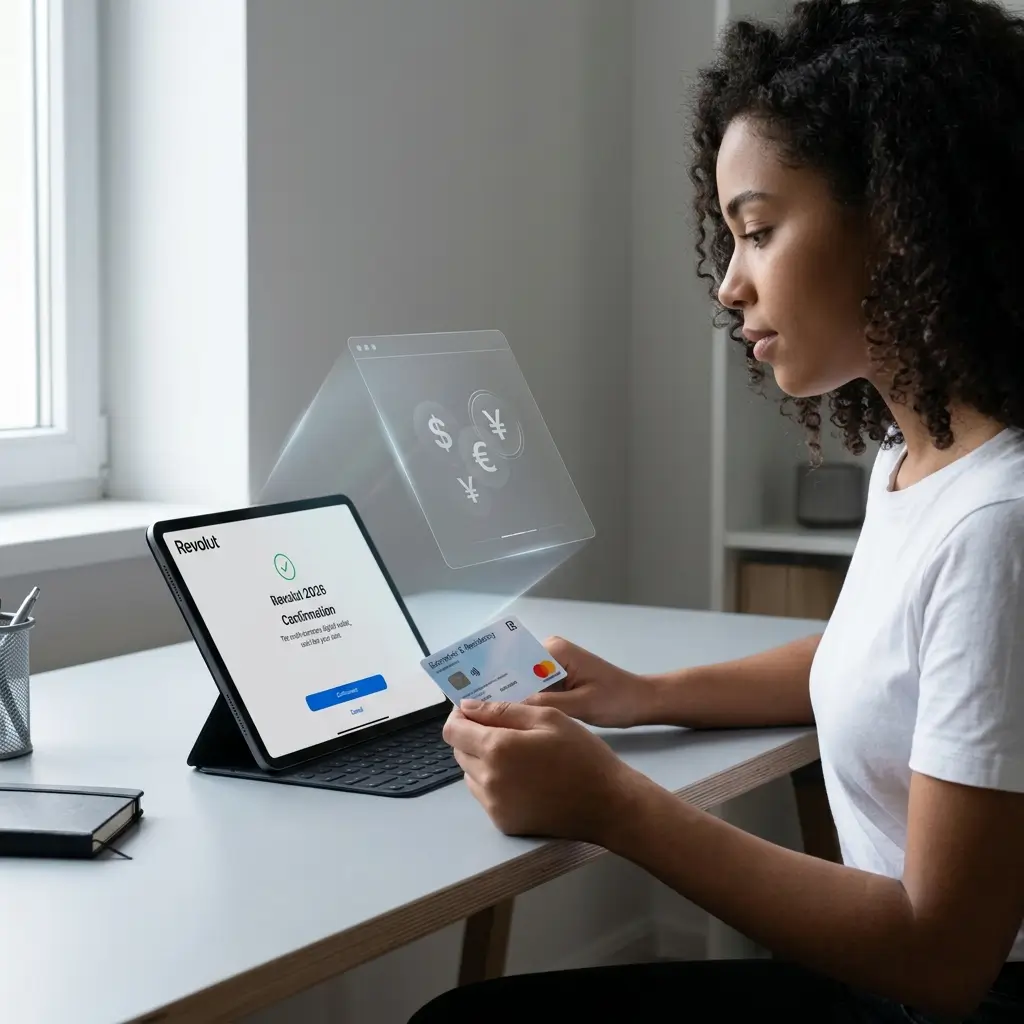
Multi-Currency Support
Freelancers working with international clients may benefit from:
- USD balances
- EUR balances
- GBP balances
- Local receiving accounts
Multi-currency support improves global payment flexibility.
Online and Mobile Banking Quality
Modern freelancers rely heavily on digital financial tools.
A strong banking platform should make it easy to:
- Send transfers
- Track expenses
- Export statements
- Manage cards
- Receive alerts
Good user experience matters daily.
Accounting Software Integrations
Freelancers often use accounting platforms such as:
Bank integrations simplify bookkeeping and tax reporting significantly.
ATM Access and Debit Cards
Freelancers who travel or operate remotely may need:
- International ATM access
- Business debit cards
- Virtual cards
- Mobile wallet support
These features improve operational flexibility.
Step 4: Submit Your Business Bank Account Application
Once you choose a bank and gather documents, the next step is completing the application process.
Online Banks vs Traditional Banks
The application process depends on the type of bank.
Online Banks and Fintech Platforms
Many modern financial providers allow freelancers to apply fully online.
Benefits include:
- Faster approval
- Digital document uploads
- Remote verification
- Quick setup
Some accounts may be approved within days or even hours.
Traditional Banks
Traditional banks may require:
- In-person appointments
- Physical document verification
- Branch visits
Approval timelines are often slower.
Double-Check Your Information
Incorrect application details may cause:
- Delays
- Verification problems
- Rejections
Before submitting, review carefully:
- Names
- Addresses
- Tax numbers
- Business details
Accuracy matters.
Step 5: Set Up Your Freelance Banking Workflow
Opening the account is only the beginning.
Freelancers should create organized financial workflows immediately after approval.
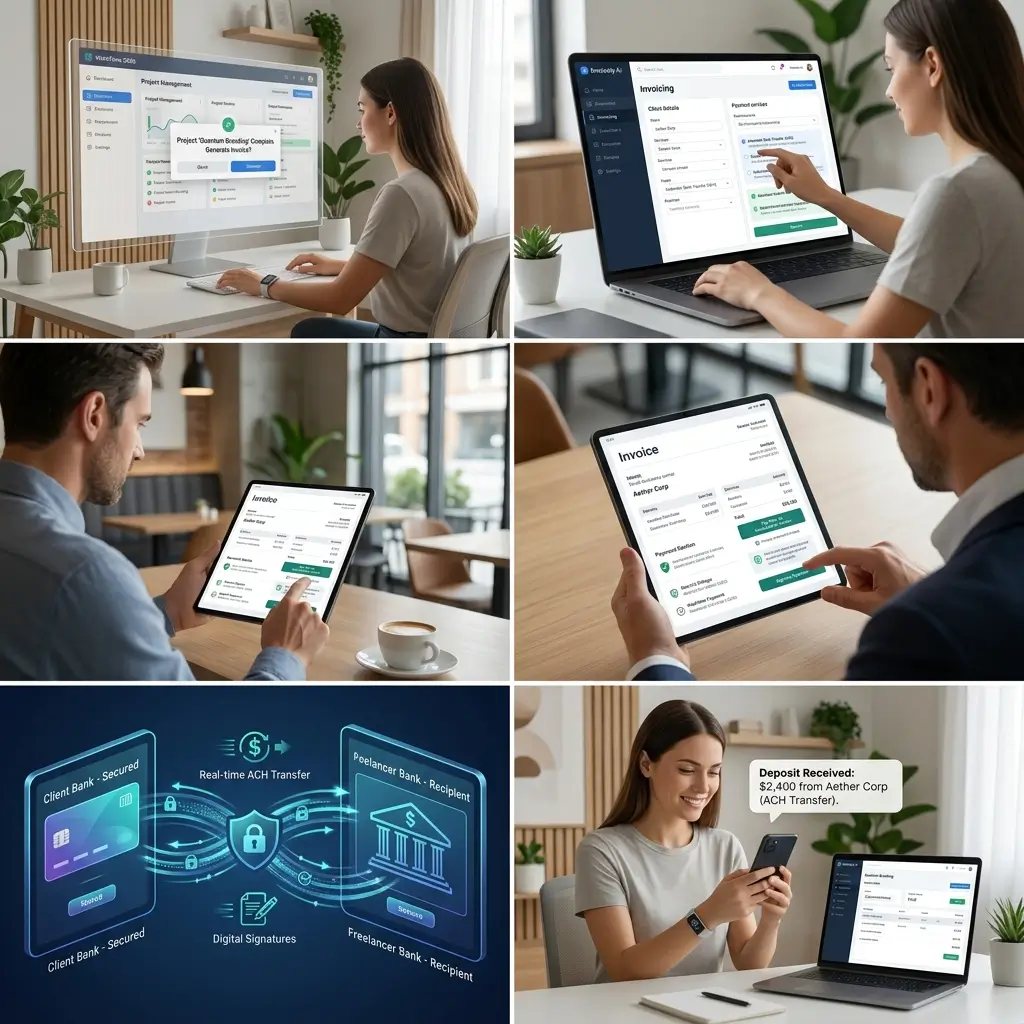
Connect Invoicing Software
Link your bank account with invoicing platforms for smoother payment tracking.
This helps automate:
- Payment reconciliation
- Income tracking
- Financial reporting
Automation saves time.
Link Payment Processors
Freelancers often connect accounts with:
Integrated systems improve cash-flow visibility.
Set Up Expense Categories
Organize spending into categories such as:
- Software
- Advertising
- Equipment
- Travel
- Contractors
This simplifies tax deductions later.
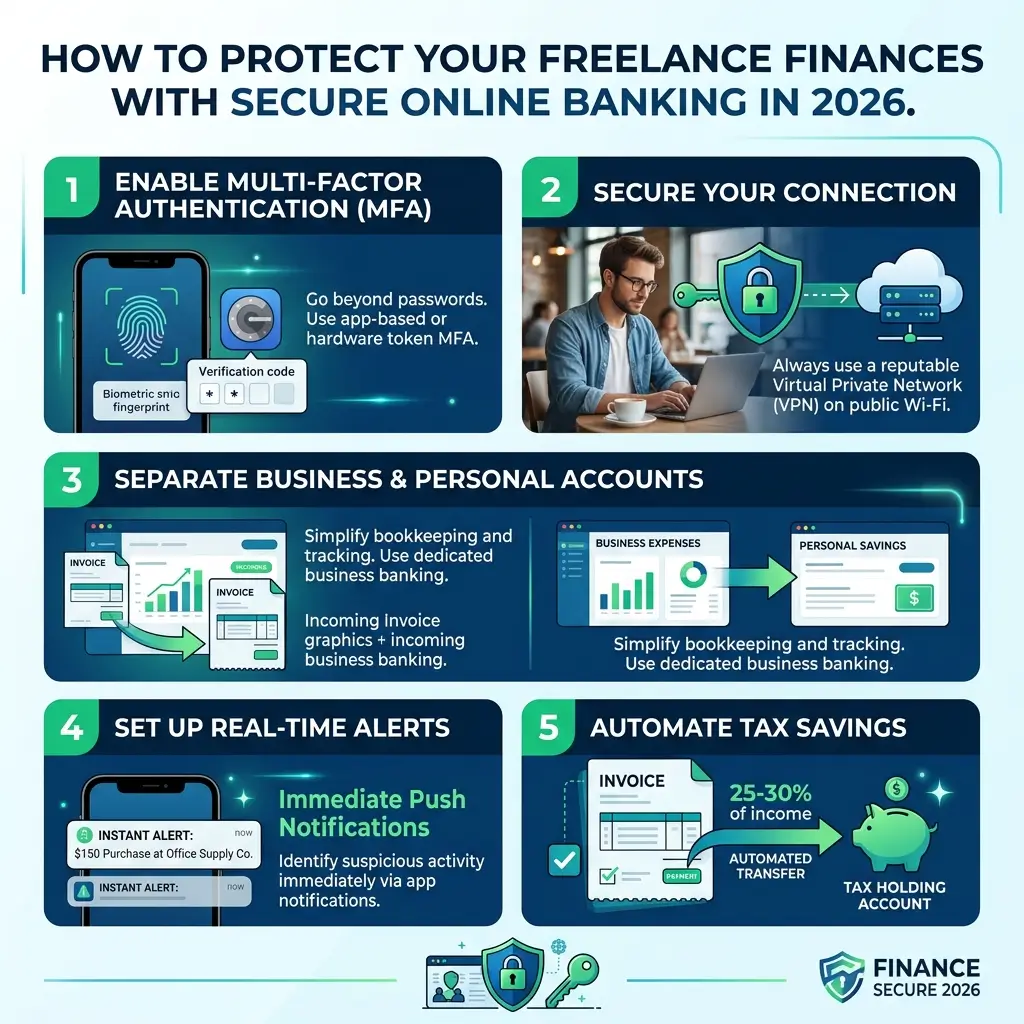
Enable Transaction Alerts
Real-time alerts help monitor:
- Deposits
- Withdrawals
- Transfers
- Suspicious activity
Strong financial visibility improves security and organization.
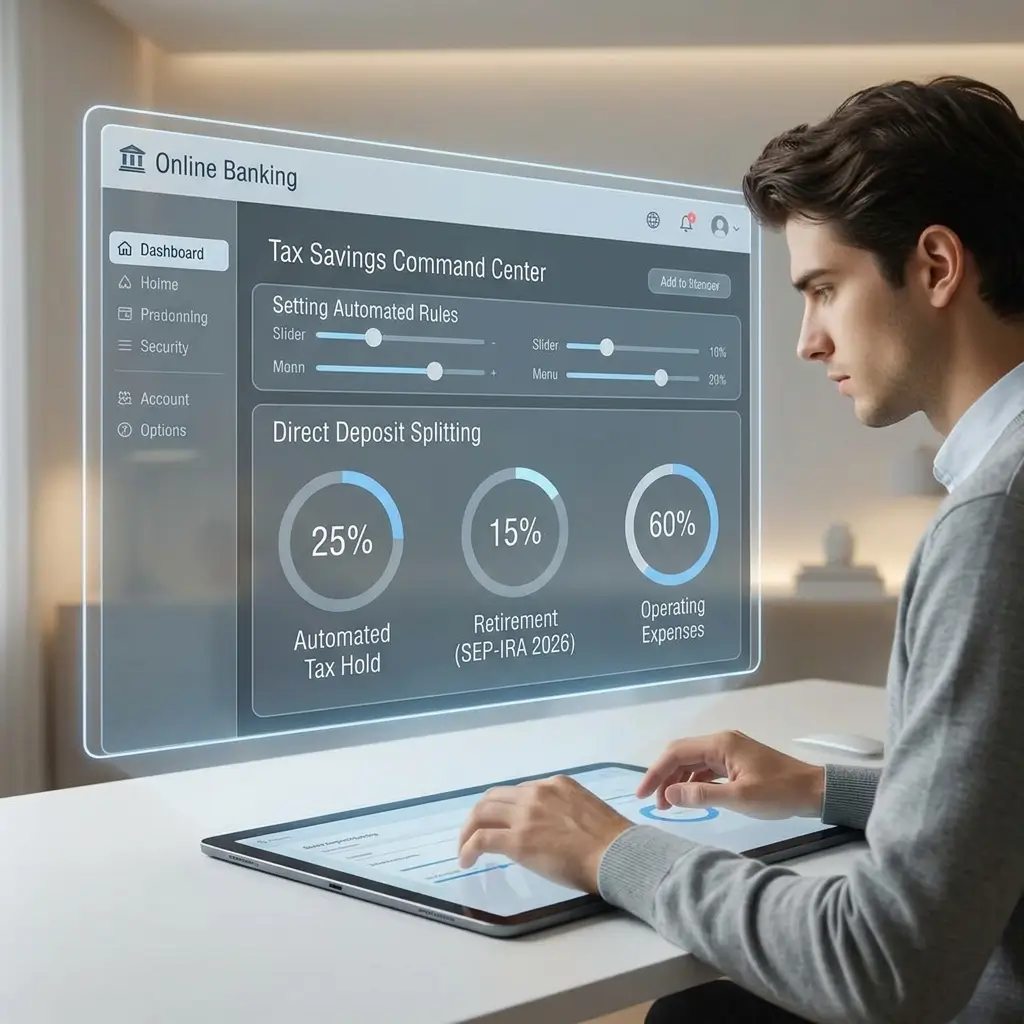
Configure Tax Savings Transfers
Many freelancers automate tax savings by transferring a percentage of every payment into separate savings accounts.
This reduces financial stress during tax season.
Best Practices for Freelancers Using Business Accounts
Successful freelancers usually follow several key financial habits.
Use the Account Only for Business Transactions
Avoid mixing:
- Personal shopping
- Household expenses
- Freelance revenue
Financial separation creates cleaner records.
Pay Yourself Separately
Many freelancers transfer money from their business account into personal accounts as:
- Owner draws
- Salary payments
This improves budgeting discipline.
Reconcile Transactions Weekly
Review:
- Deposits
- Expenses
- Fees
- Transfers
Weekly reviews prevent bookkeeping problems from accumulating.
Maintain Emergency Reserves
Freelance income can fluctuate.
Keeping reserves inside business savings accounts improves financial stability.
Keep Records of All Deposits
Maintain organized documentation for:
- Client invoices
- Payment confirmations
- Contracts
- Receipts
Good recordkeeping protects freelancers during audits or disputes.
Common Mistakes Freelancers Should Avoid
Many freelancers create avoidable financial problems because of poor banking habits.
Mixing Personal and Business Spending
This creates:
- Tax confusion
- Poor bookkeeping
- Cash-flow visibility problems
Separate systems are much easier to manage.
Choosing a Bank Based Only on Low Fees
The cheapest account is not always the best option.
Freelancers should also evaluate:
- Features
- International support
- Integrations
- User experience
Functionality matters long term.
Ignoring International Payment Costs
Freelancers serving global clients should review:
- FX spreads
- Transfer fees
- Currency conversion costs
These hidden charges can significantly reduce profits.
Not Reviewing Transaction Limits
Some online banks impose limits on:
- Transfers
- Deposits
- Withdrawals
Understand account restrictions before relying heavily on the platform.
Opening an Account Without Integration Support
Manual bookkeeping wastes time.
Banks with strong integrations improve efficiency significantly.
Online Banks vs Traditional Banks for Freelancers
Freelancers today often choose between traditional banking institutions and digital-first fintech providers.
Traditional Banks
Advantages
- Physical branches
- Established reputation
- In-person support
Disadvantages
- Higher international fees
- Slower onboarding
- Limited innovation
Online Banks and Fintech Platforms
Advantages
- Lower fees
- Faster setup
- Better international support
- Strong mobile apps
- Multi-currency tools
Disadvantages
- Limited branch access
- Variable customer support
Many freelancers now prefer fintech-focused solutions for international business operations.
The Long-Term Benefits of a Business Bank Account
A dedicated business banking system improves far more than organization.
It helps freelancers:
- Scale more efficiently
- Build financial discipline
- Improve professionalism
- Simplify taxes
- Monitor profitability
- Prepare for future business growth
Freelancers who establish strong financial systems early often experience smoother long-term business expansion.
Final Thoughts
Opening a business bank account is one of the most important financial steps freelancers can take. It creates cleaner organization, improves professionalism, simplifies taxes, and provides a stronger operational foundation for long-term growth.
The right business account should support your workflow with:
- Low fees
- Strong digital tools
- International payment support
- Reliable integrations
- Secure online banking
By choosing carefully and setting up organized financial systems early, freelancers can save time, reduce stress, and build a more scalable business structure.
In 2026, successful freelancers are not only skilled service providers.
They are financially organized business owners who treat their freelance income like a real business from day one.